
IC3 Blockchain Camp 2022
August 1-7, 2022 – Gates Hall @Cornell University, Ithaca, NY
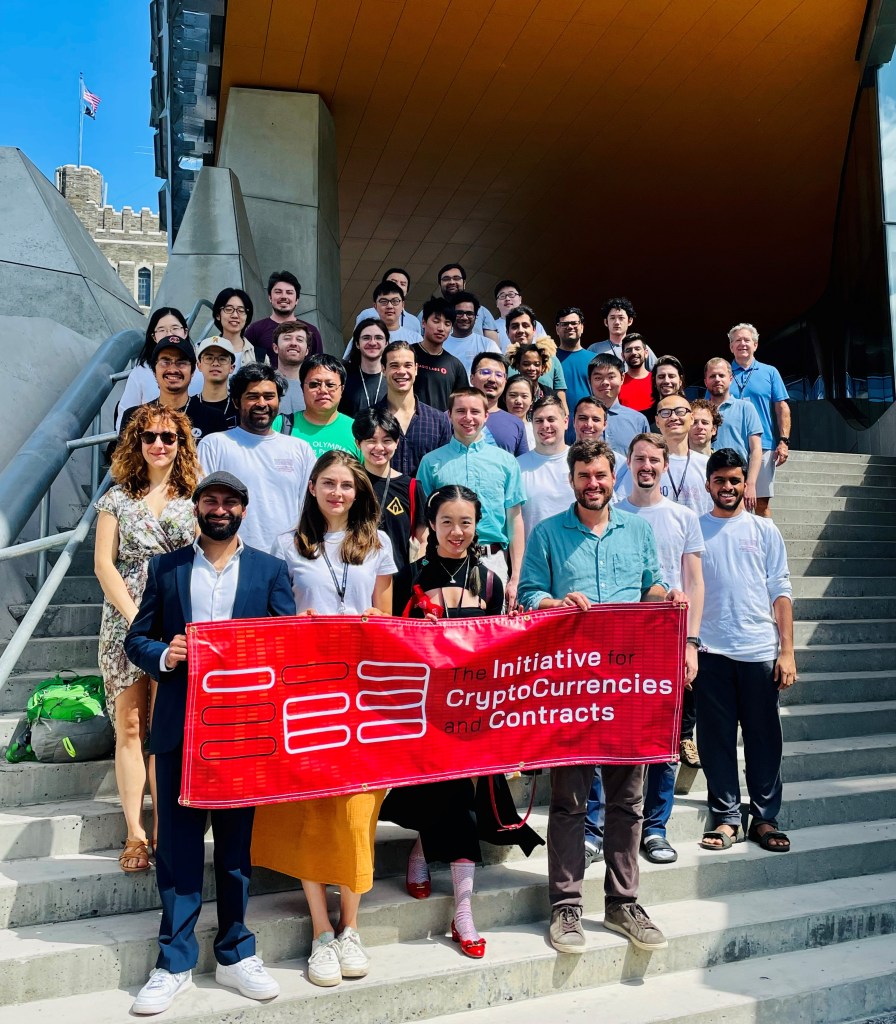
Thank you to everyone who joined us for the 7th Annual IC3 Blockchain Camp! This 7-day experience was hosted in-person on the Cornell Campus in Ithaca, NY. Our Camp technical committee of Surya Bakshi, Tyler Kell and Patrick McCorry prepared an immersive coding and learning experience with talks, panels, whiteboard sessions, and a week-long hackathon.
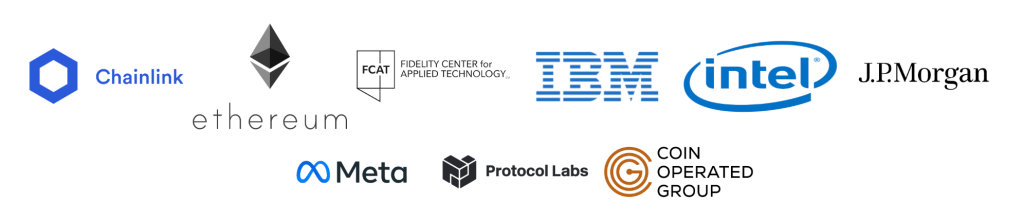
Camp Sponsors
Camp Schedule & Activities
The camp covered a range of exciting blockchain topics including DeFi, cryptography, scaling, NFTs, and more!

Content included talks, tutorials, and panels hosted by blockchain leaders, academia, industry, and the open source community.
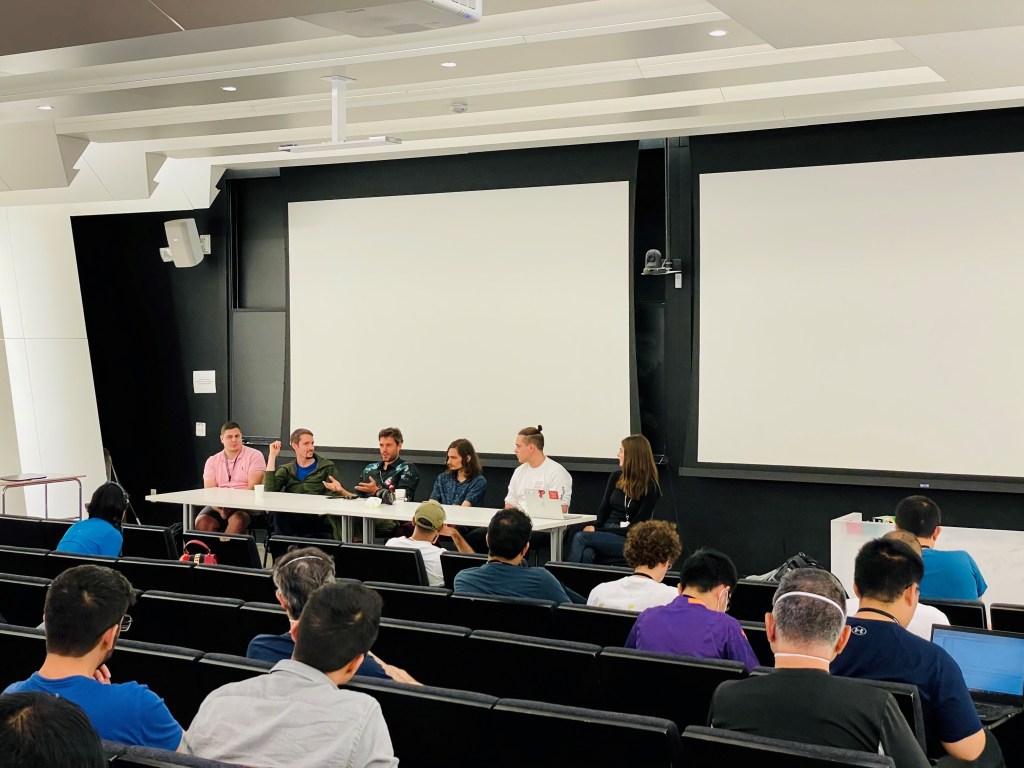
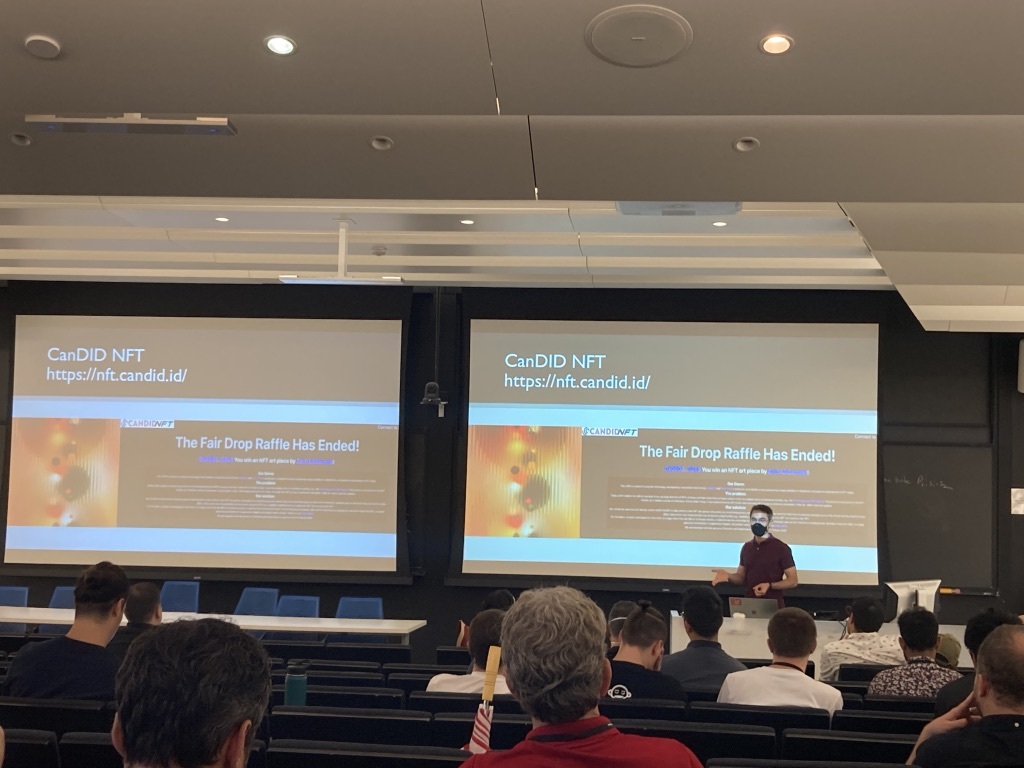
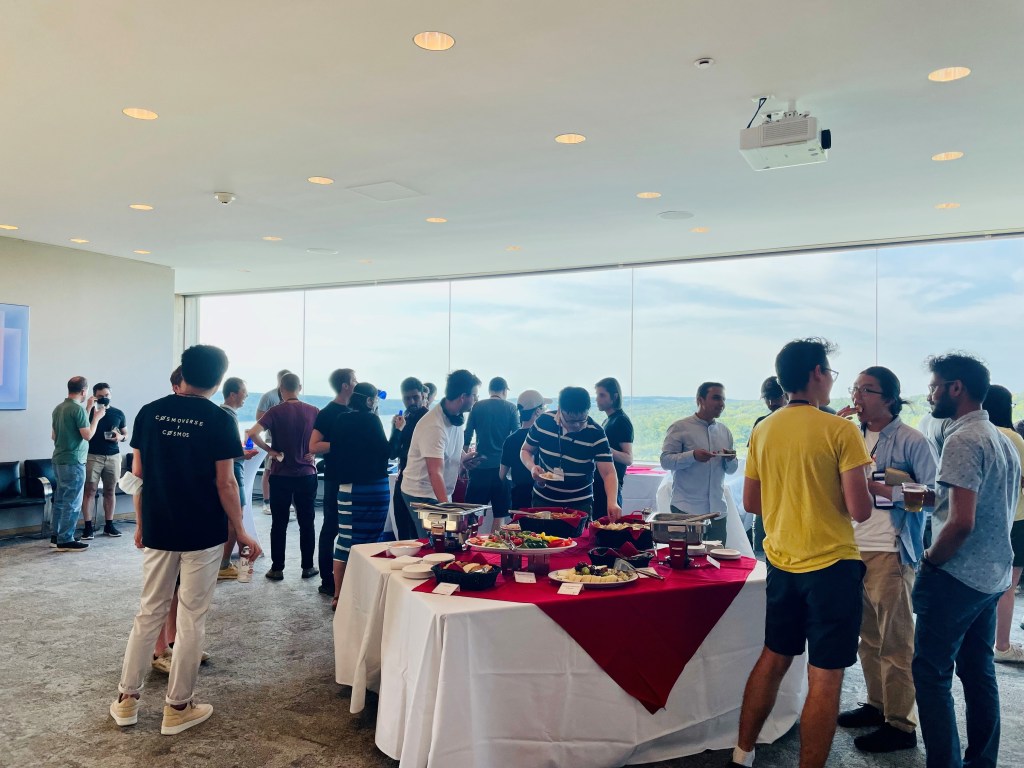
The camp also featured social events including a rump session, games session, opening and closing dinners at the Statler Hotel, and a reception at the Herbert F. Johnson Museum of Art. IC3 Partner, Chainlink hosted a party for camp attendees at the Big Red Barn on the Cornell campus.
The Hackathon
Project teams self-selected projects on Sunday after considering the project proposals. The teams coded throughout the week, and made project presentations and demos on Saturday. Six hackathon teams submitted projects this year. Projects were judged by Sarah Azouvi (Protocol Labs), Lorenz Breidenbach (Chainlink), and Soumya Basu (Cornell).
The Top 3 Projects:
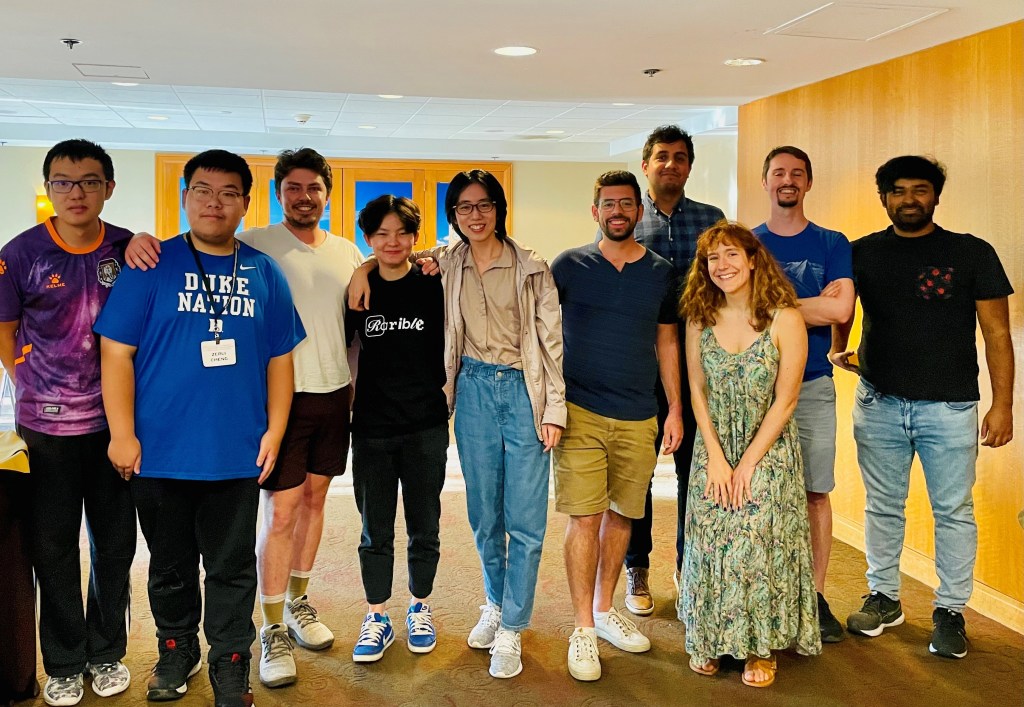
First Place: “Client Security”
Team Members: Roi Bar-Zur (project leader), Ittay Eyal (project leader), Zerui Cheng, Kristian Gaylord, Shutong Qu, Mohammad Rezaei, Nicolas Serrano, and Lulu Zhou
Summary: Blockchain technology empowers users to directly control their digital assets (e.g., cryptocurrency and NFTs). But, with great power comes great responsibility. Users are also responsible for the security of their own assets. As we can learn from many stories of losses and hacks, this is far from trivial.
Our website lets users design and deploy a smart contract to secure funds using multiple keys. The user chooses a number of keys and inserts information about the keys (how likely is each key to be safe/lost/leaked/stolen). The website outputs a suggested wallet (optimal up to 6 keys) and lets the user deploy it to Ethereum with their own public keys. Then, the contract can be used with our command line interface. This project is based on the research paper by Ittay Eyal (presented at Tokenomics 2021).
Resources: research paper, current website, GitHub
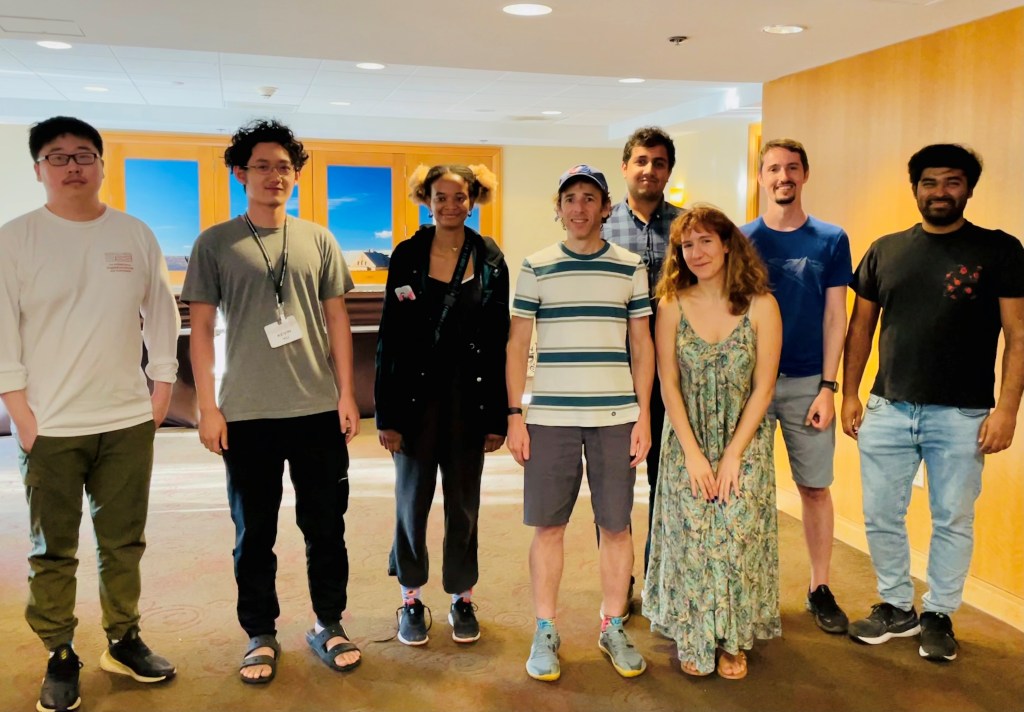
Second Place: “Surprising Enclave Applications using Oasis Sapphire”
Team Members: Andrew Miller (project leader), Sylvain Bellemare (project leader), Nerla Jean-Louis, Kevin Yu, Afonso Tinoco, and Zhengxun Wu
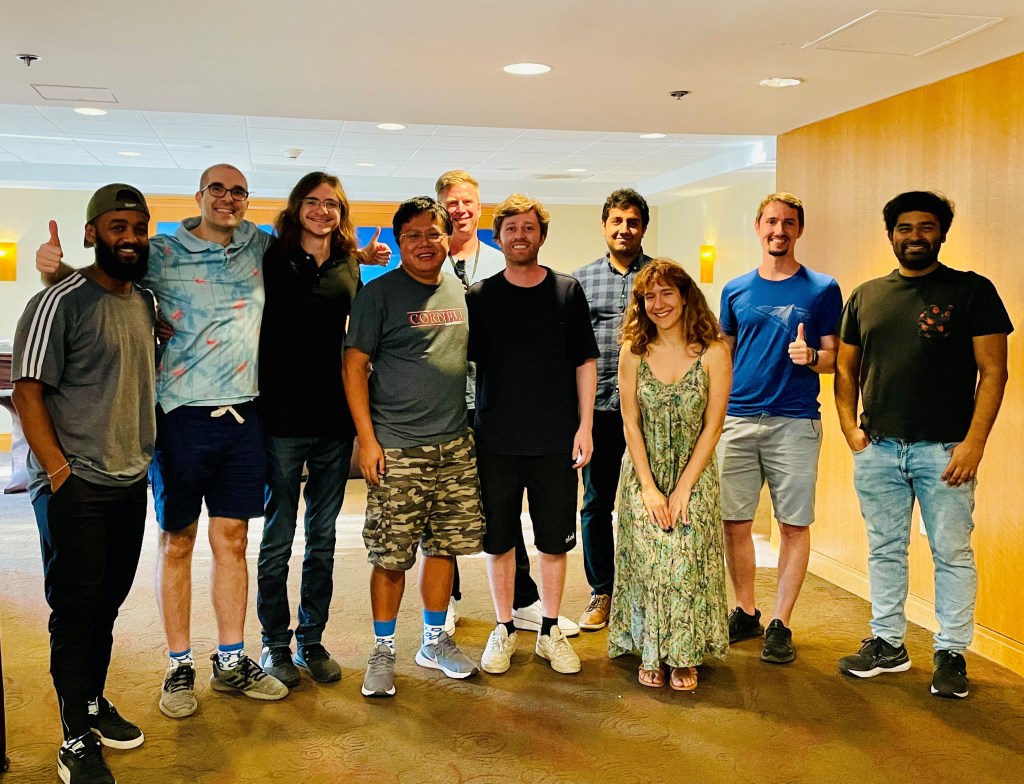
Third Place: “Application-Specific EVMs using Precompiled Contracts”
Team Members: Patrick Kiefer (project leader), Edward Mehrez (project leader), Preston Rozwood (project leader), Connor Stein, Jim Tao, and Antenhe Tena
Additional Projects
Atomic NFTs
Members: Phil Daian (project leader), Tyler Kell (project leader), Jessy Huang, James Austgen, Austin Liu, and Sarisht Wadhwa
Summary: Our project explored using a proof of complete knowledge to create an atomic NFT, and NFT that can only ever be held by an address whose owner has demonstrated having unencumbered access to its private key. The idea behind complete knowledge is that it demonstrates that the owner has control to do anything, and thus cannot be bribed or coerced into behaving a certain way, thwarting guaranteed voting bribery systems and preventing an NFT from being fractionalized inside a smart contract.
Resources: GitHub (Jessy) and GitHub (Sarisht)
Privacy-preserving additions to PBS and MEV-Boost
Members: Mikerah Quintyne-Collins (project leader), Surya Bakshi (project leader), Chris Buckland, Quintus Kilbourn, Xinyuan Sun, Leland Lee, and Parth Gargava
Summary: We studied solutions to privacy in the MEV-Boost architecture designed for PBS in the next iteration of Ethereum. Solving privacy was a challenging task, instead we explored a few classes of solutions. both cryptographic and incentive protocols as well, and outlined them in an etresear.ch post. We aim to continue this work going forward and mopre closely study the threshold encryption approach, proposed by some, as a solution.
Resources: website
Addressing Capital Efficiency in Decentralized Spot Markets
Members: Songwei Chen (project leader), Wayne Chen (project leader), Michael Mirkin, Fan Zhang, Bineet Mishra, Weizhao Tang, Haoqian Zhang, and Marwa Mouallem
See you all next year!
 IC3 - The Initiative for Cryptocurrencies and Contracts